• Antique Pocket Watches
  • Contact
  • Hints and suggestions

    Make it a rule to test every watch for magnetism. A small pocket compass, placed close to the balance when the watch is running, will indicate by a vibrating motion if the balance is polarized. If it is, the watch should be treated, case and all, in a demagnetizer.
    When repairing a watch inspect the balance [...]

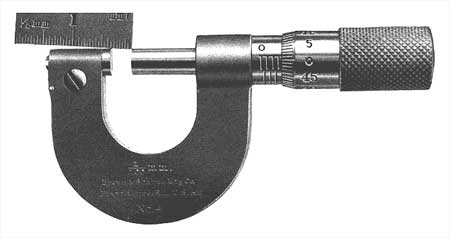
    Some hints on measuring as applied to watchmaking

    The success of every undertaking depends largely on the ability to figure out and make practical plans, as well as to work correctly from plans already made. The ordinary method, used in the past, is not well adapted to our line of work in this scientific age; we should accustom ourselves to speak in exact [...]

    Casing a movement

    Before casing a movement, always oil the winding bar in the pendant, where it runs in the sleeve, to prevent rust and squeaking. See that the movement lines up properly with the winding bar in the case, so it will wind and back ratchet freely. It is sometimes necessary to remove the winding bar and [...]

    How to oil a watch

    Before final assembly of the movement, balance endstones should be mounted on balance cock and pillar plate and respective capped jewels oiled.
    For the purpose of retaining a sufficient amount of oil in the pivot holes, we take advantage of a natural phenomenon, which is called capillary action. This action, roughly stated, is the tendency of [...]

    Modern watch cleanind method

    GENERAL — Cleaning machines, available to the watch trade, make it possible to clean watch and instrument parts thoroughly in wire mesh baskets, subdivided so as to accommodate large and small parts separately. To clean a mainspring, without distorting its shape, wipe it with tissue paper, saturated with benzol or carbon tetrachloride. Dipping it into [...]